What the Wheaten Greeting Actually Taught Us
By The Be Like Baxter team
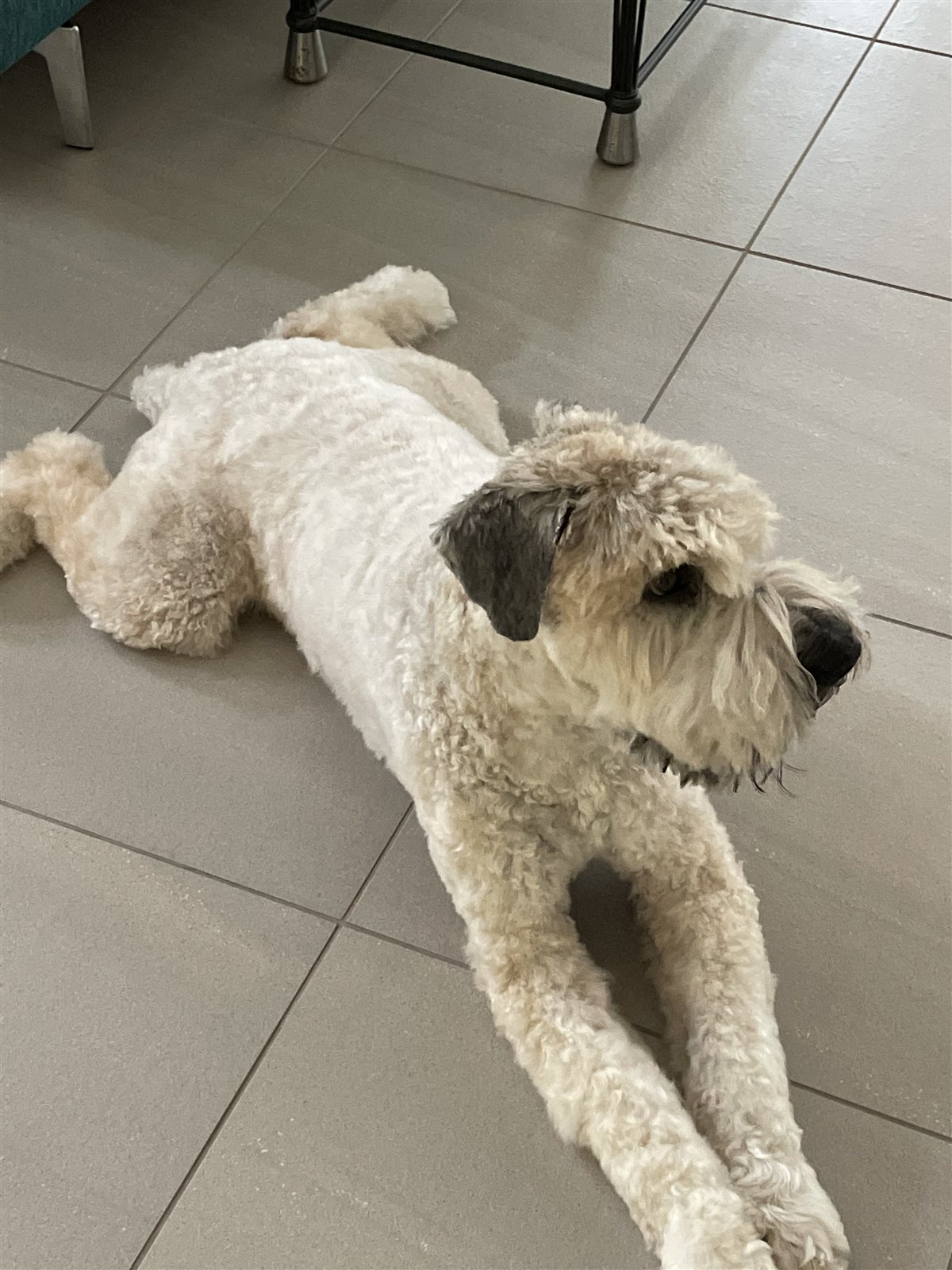
Baxter had one greeting and he used it on everybody.
It went like this: all four legs left the ground at once, and whoever had just walked through the door got hugged whether they had asked for it or not. Wheaten Terriers are known for this. Trainers will tell you, correctly, that it is something you are supposed to fix.
We never fixed it. And after he was gone, it became obvious that the thing we had been calling bad manners was actually the most consistent moral position anyone in the house held.
He decided before he knew anything
Here is what makes it remarkable. Baxter greeted people before he had any information about them. Not after a conversation. Not after finding out where they worked or what they believed or who they voted for. The greeting came first, unconditionally, and everything else came later — if it came at all.
The mail carrier got it. The delivery drivers got it, all of them, every company. Friends got it, but so did complete strangers who had knocked on the wrong door. There was no tier system. There was no version of the greeting he saved for people who had earned it.
We do the opposite, and we think we are being sensible. We gather a little information — an accent, a bumper sticker, a hat, a name — and we run it through some internal sorting machine, and by the time we say hello we have already decided roughly who this person is and how much of ourselves they get.
Baxter would have found that exhausting.
The greeting was not naive
It is tempting to write this off as the simplicity of a dog who did not know any better. But watch what it actually produced.
People changed around him. The delivery driver who was having a miserable day would stand in the doorway for a minute longer than the job required. Guests who arrived stiff loosened up. He was not a good judge of character. He was something more useful: he was an invitation, and most people accepted.
That is the part worth stealing. Not the jumping — please do not jump on your mail carrier. The part where you lead with warmth and let the other person decide what to do with it.
What it costs you
Almost nothing, is the honest answer.
The fear is that greeting everyone the same way makes you a pushover, or that you will hand your goodwill to someone who does not deserve it. Sometimes you will. Baxter certainly did, repeatedly, to people who were only there to read the water meter.
But weigh it. On one side: occasionally being generous toward someone who did not need it. On the other: a lifetime of small, cold, pre-emptive judgments, most of them wrong, all of them making the day a little worse for two people instead of one.
He picked the first one every single time, for his whole life, and the street was better for it.
That is the whole idea. Be like Baxter.
Join the movement
Make him a promise
One minute, no fine print — just a promise to look for the good in everybody.
Take the PledgeKeep reading
-
Prejudice Is Learned, Which Means It Can Be Unlearned
Five practical ways to push back against racism and prejudice in ordinary life — celebrating, speaking up, teaching children, standing with people, and backing the organisations that do the work.
-
Most Mistrust Is Just Fear Wearing a Better Coat
Why difference makes us uneasy, what is actually going on underneath it, and the daughter who does not vote the way her father does.
-
Five Ways to Stop Trying to Fix People
Nobody chooses to be judged, and nobody enjoys being managed. Five habits that make you easier to be around — including the one that quietly does the most damage.