Prejudice Is Learned, Which Means It Can Be Unlearned
By The Be Like Baxter team
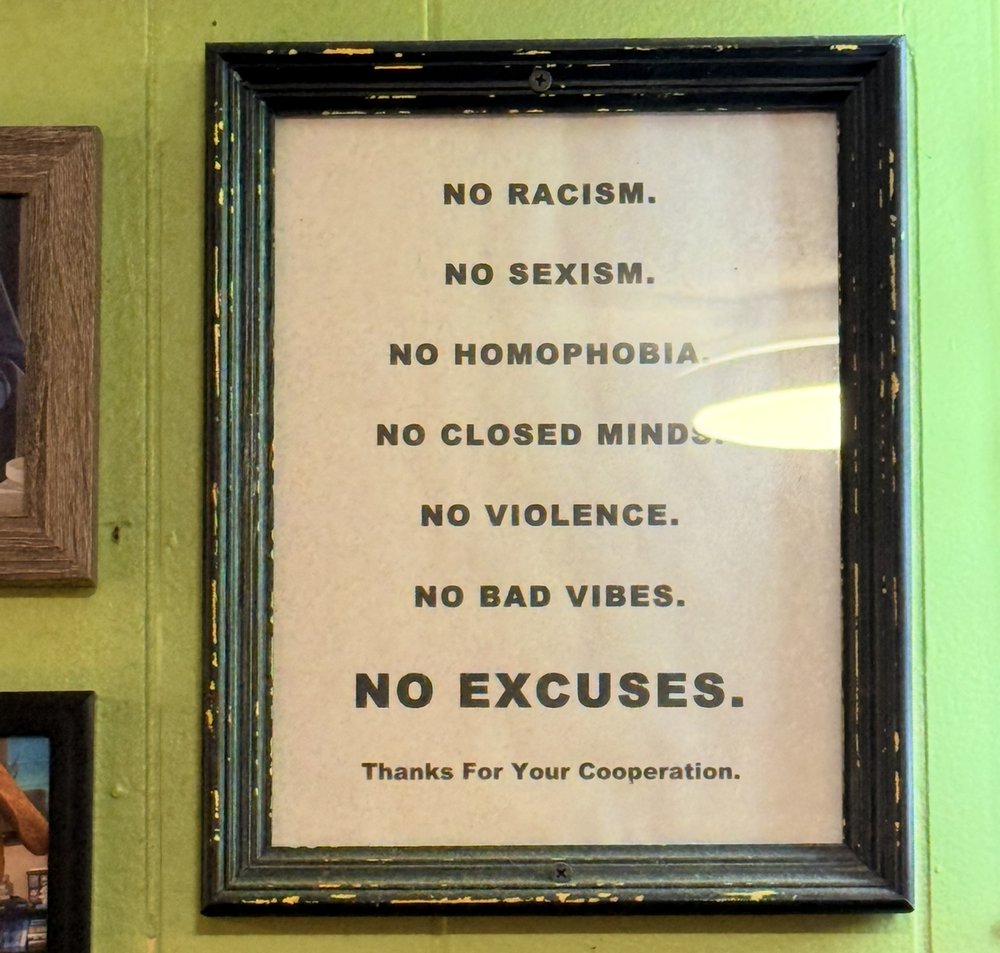
There is one sentence in UNICEF USA’s piece on this that justifies the existence of a website like ours, and it is worth putting first:
Prejudice and hate are not innate. They are learned behaviours — and they can be unlearned.
Nobody is born sorting people. It gets installed, in small increments, by the adults in the room, by what is on the television, by which jokes got a laugh at which dinner table. Which is bleak until you notice the other half of it: a thing that was taught can be taught differently. That is not optimism. It is just how learning works.
Their piece lays out five ways in. We have kept their five and put our own account of each below.
1. Celebrate other cultures — and mean it
The lowest-effort, highest-return item on the list, because it involves going somewhere nice and eating something good.
Turn up to the things your neighbours put on: festivals, film series, guest lectures, language classes, the events run out of local organisations and houses of worship. Support the businesses that immigrants have built — the restaurants, the grocery stores where you cannot identify half the produce. Watch films from other countries. Read your children stories where the hero is not from your street.
And take the children with you. Not as a lesson. As a day out.
2. Call out bigotry, including the joke version
This is the uncomfortable one, and the piece does not soften it.
Hate speech has become markedly more casual in America and Europe over the past decade, and its favourite move is to blame immigrants and minorities for problems that have nothing to do with them. Most of the time it does not arrive as a speech. It arrives as a joke, at a table, from somebody you otherwise like.
Say something. Not a lecture — just enough that the room knows the joke did not land. Stereotypes are not harmless when they are funny; being funny is precisely how they get normalised. If it is in a news report or a social feed, write the letter, leave the comment. The point is never to win the argument. The point is that silence reads as agreement, and somebody else at that table is listening.
Tell your children they are allowed to do this too.
3. Teach children how to talk about difference
The instinct many parents have is that raising the subject of race with a child plants something. The evidence runs the other way: talking about differences does not increase prejudice in children. Not talking about it leaves them to assemble an explanation on their own, out of whatever is lying around.
So give them the vocabulary. Help them tell the difference between racism and discrimination, and help them recognise a stereotype when one goes past. Leave room for the blunt questions children ask, because a question asked out loud is one you can actually answer.
When something has happened to them, name it accurately rather than smoothing it over. A child who is told what they experienced was real learns both that they were not imagining it and that it is a thing adults will discuss. Then teach them how to stand up — for themselves, and for somebody else.
The process starts earlier than most people are comfortable with, and it runs on example more than instruction. Children absorb the adults around them whether or not anybody is teaching.
4. Stand with people, and step in when it is safe
When the public visibly sides with the person being targeted, bullies lose their audience, and the audience was the point.
If you see somebody being harassed and you can help safely, the piece is specific about how. Make your presence as a witness obvious. Catch the eye of the person being targeted and ask whether they want support. Do not escalate it. You are not there to win a confrontation; you are there so that somebody is not alone in one.
The safety condition is real and is not a let-out clause. Being a witness who can describe what happened is worth more than being a second casualty.
5. Back the organisations doing the work
Individual decency does not scale on its own, and some of this needs institutions. UNICEF has spent more than seventy-five years arguing that children should be seen as children first — before nationality, before status, before whatever adults have decided about their parents. Children displaced by war, violence and poverty need that argument made on their behalf, wherever they have ended up.
Their own summary is the honest one: there is no single solution to racism or discrimination. It takes education, advocacy, fair policy and sustained community support, and it takes longer than anybody wants. What shortens it is real stories, real relationships, and people who keep speaking up when a stereotype goes past.
Where the dog comes back in
Baxter is a strange mascot for a page about racism, and that is rather the point.
He did not know colour, nationality, religion, who you loved or who you voted for. He was not being principled about it — he genuinely lacked the equipment. What he had instead was a single response to every human being who came through the door, delivered at full speed, with all four legs off the ground.
Everything on this page is a description of how an adult with a fully installed sorting mechanism can get back to roughly where he started.
Prompted by Sarah Ferguson, UNICEF USA, and worth reading in the original. We keep it in the library here: read the source. Their piece is at www.unicefusa.org.
Join the movement
Make him a promise
One minute, no fine print — just a promise to look for the good in everybody.
Take the PledgeKeep reading
-
Most Mistrust Is Just Fear Wearing a Better Coat
Why difference makes us uneasy, what is actually going on underneath it, and the daughter who does not vote the way her father does.
-
Five Ways to Stop Trying to Fix People
Nobody chooses to be judged, and nobody enjoys being managed. Five habits that make you easier to be around — including the one that quietly does the most damage.
-
Accepting Somebody Is Not the Same as Agreeing With Them
The objection everybody raises first — doesn't accepting people mean letting them off? No. Here is the difference, and why it is the hardest easy thing you will ever try.